
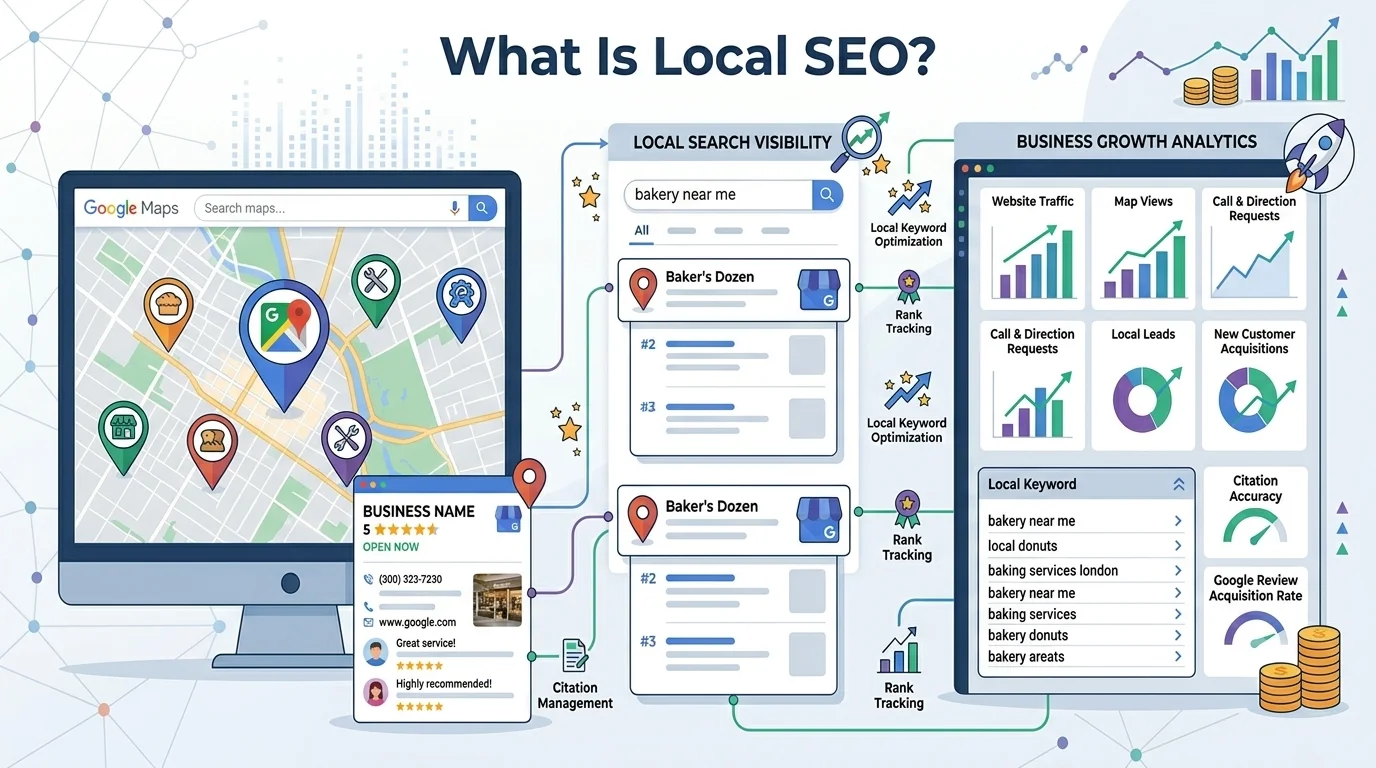
What is Local SEO? It is the process of improving a business’s visibility in location-based search results. It helps companies appear when people search for products or services within a specific area, whether that is a city, borough, town, or neighbourhood.
For example, if someone searches for “dentist in Camden”, “plumber near me”, or “best restaurant in Westminster”, Google will display local businesses that it believes are the most relevant, trustworthy, and nearby.
Unlike traditional SEO, which focuses on improving visibility nationally or globally, local SEO aims to connect businesses with customers in their local area. It combines website optimisation, Google Business Profile management, reviews, citations, local content, and authority signals to improve rankings in Google Search and Google Maps.
For businesses operating in competitive locations such as London, local SEO can be one of the most effective ways to generate qualified leads and attract nearby customers.
Understanding Local SEO
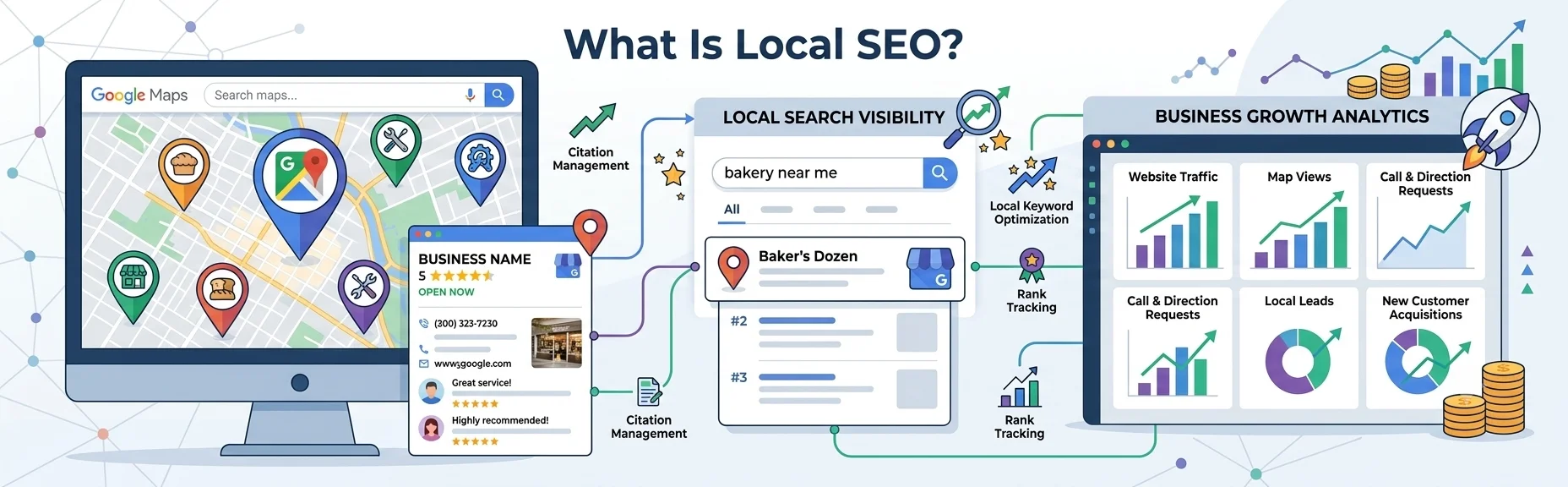
Local SEO helps search engines understand where a business is located, what services it offers, and which customers it serves.
When someone performs a local search, Google analyses a range of signals to determine which businesses should appear in the results. These signals include business information, customer reviews, website content, backlinks, location relevance, and user engagement.
The goal is simple. Google wants to provide the most useful answer to the searcher’s query.
For example, if a user searches for “accountant in Islington”, Google will try to identify businesses that:
- Operate in or near Islington
- Offer accounting services
- Have positive reviews
- Maintain accurate business information
- Demonstrate authority and trust
Businesses that optimise these factors are more likely to appear in the Local Pack, Google Maps, and organic search results.
Understanding these ranking signals is an important first step before exploring How Local SEO Works and how Google evaluates local businesses.
Why Local SEO Matters for Modern Businesses
Consumer behaviour has changed dramatically over the past decade.
Before contacting a business, customers typically search online, compare options, read reviews, and check business information.
This behaviour is especially common for local services such as:
- Dentists
- Solicitors
- Restaurants
- Electricians
- Estate agents
- Accountants
Local SEO helps businesses become visible at the exact moment potential customers are searching for a solution.
For example, a restaurant in Central London may rely on local SEO to appear when users search for dining options nearby. Businesses operating within hospitality sectors often invest in Local SEO for Restaurants to improve visibility and attract more diners.
Local search visibility can directly influence:
- Website traffic
- Phone calls
- Direction requests
- Online bookings
- Lead generation
- Revenue growth
This is one of the reasons why Why Local SEO Matters for London Businesses has become such an important topic for companies competing in highly competitive markets.
How Local SEO Differs from Traditional SEO
Although local SEO and traditional SEO share some similarities, their objectives and ranking factors differ significantly.
Traditional SEO focuses on improving rankings for broader searches that may not include a location.
Examples include:
- Digital marketing agency
- Website design services
- SEO tools
Local SEO focuses on location-specific searches such as:
- SEO agency in London
- Restaurant near me
- Dentist in Camden
- Solicitor in Westminster
The biggest difference is that local SEO relies heavily on geographic relevance.
Google evaluates factors such as:
- Business location
- Google Business Profile
- Reviews
- Citations
- Local backlinks
- Proximity to searchers
Traditional SEO focuses more heavily on:
- Content authority
- Domain strength
- National rankings
- Backlink profiles
Businesses targeting local customers often benefit from combining both strategies to maximise visibility.
Key Components of a Local SEO Strategy
Although local SEO and traditional SEO share some similarities, their objectives and ranking factors differ significantly.
Traditional SEO focuses on improving rankings for broader searches that may not include a location.
Google Business Profile
Google Business Profile is one of the most important components of local SEO.
Previously known as Google My Business, this free platform allows businesses to manage how they appear in Google Search and Google Maps.
A complete Google Business Profile typically includes:
- Business name
- Address
- Phone number
- Opening hours
- Website link
- Services
- Images
- Reviews
Google uses this information to determine whether a business is relevant to local searches.
A well-optimised profile can improve visibility within the Local Pack and Google Maps results.
Businesses looking to improve local visibility often invest in Google Maps SEO Services London to strengthen these important ranking signals.
Local Citations
Local citations are mentions of a business’s details across online directories and websites.
A citation usually contains:
- Business name
- Address
- Phone number
This information is often referred to as NAP data.
Examples of citation sources include:
- Yell
- Yelp
- Apple Maps
- Bing Places
- Thomson Local
Consistent citations help search engines verify the legitimacy of a business.
When information is inconsistent across platforms, search engines may become less confident about the business, which can negatively impact local rankings.
Reviews and Reputation
Customer reviews play a major role in local SEO performance.
Reviews help Google assess whether a business is trustworthy and relevant to users.
Positive reviews can influence:
- Rankings
- Click-through rates
- Customer trust
- Conversion rates
Google also evaluates review quality, review frequency, and business responses.
Businesses that actively manage reviews often achieve stronger visibility than competitors who ignore customer feedback.
Reviews are considered one of the most important elements discussed in Local SEO Ranking Factors Explained because they directly influence both rankings and consumer decision-making.
Local Content
Local content helps businesses demonstrate geographic relevance.
Instead of creating generic content, businesses should develop resources that address local audiences and local search intent.
Examples include:
- Local guides
- Borough-specific pages
- Community news
- Industry updates
- Local case studies
For example, a London-based business may create content around local market trends, borough-specific services, or community events.
This helps search engines understand the areas the business serves while providing value to potential customers.
Local content also supports internal linking opportunities and strengthens overall topical authority.
Benefits of Local SEO
Businesses that invest in local SEO can gain a number of advantages.
Increased Visibility
Local SEO helps businesses appear in front of customers who are actively searching for their services.
More Qualified Leads
Users performing local searches often have strong purchase intent, making them more likely to convert.
Improved Google Maps Presence
Optimisation can increase visibility within Google Maps and local search results.
Stronger Brand Trust
Positive reviews, accurate information, and consistent online visibility help build trust.
Better Return on Investment
Compared with many forms of paid advertising, local SEO often provides sustainable long-term results.
Businesses that want to strengthen local visibility often begin by exploring Local SEO Services in London to understand the strategies that drive long-term growth.
Common Local SEO Mistakes
Many businesses struggle with local SEO because they overlook important ranking factors.
Some of the most common mistakes include:
Incomplete Google Business Profiles
Missing information can reduce visibility and user engagement.
Inconsistent Business Information
Different addresses or phone numbers across directories can create confusion for search engines.
Ignoring Reviews
Failing to collect and respond to reviews can weaken trust signals.
Poor Mobile Experience
Most local searches occur on mobile devices. A slow or difficult-to-use website can hurt rankings and conversions.
Weak Local Content
Businesses often create generic content that fails to address local search intent.
Lack of Local Authority
Without citations, reviews, and backlinks, businesses may struggle to compete in local search results.
Many of these issues are addressed when learning How Google’s Local Pack Works and understanding the factors that influence local visibility.
Conclusion
Local SEO is far more than simply adding a location to a website.
According to Google Search Central, businesses should focus on providing helpful content, accurate information, and a positive user experience to improve search visibility.
It is a comprehensive strategy that helps businesses improve visibility within Google Search, Google Maps, and local search results. By optimising Google Business Profiles, managing citations, generating reviews, creating local content, and building authority, businesses can attract more customers and generate more leads from their target areas.
As local search continues to evolve, businesses that invest in strong local SEO foundations will be better positioned to compete, grow, and remain visible in increasingly competitive markets.
Whether you operate a small local business or a multi-location company, understanding local SEO is the first step towards building a stronger digital presence and achieving sustainable growth.