
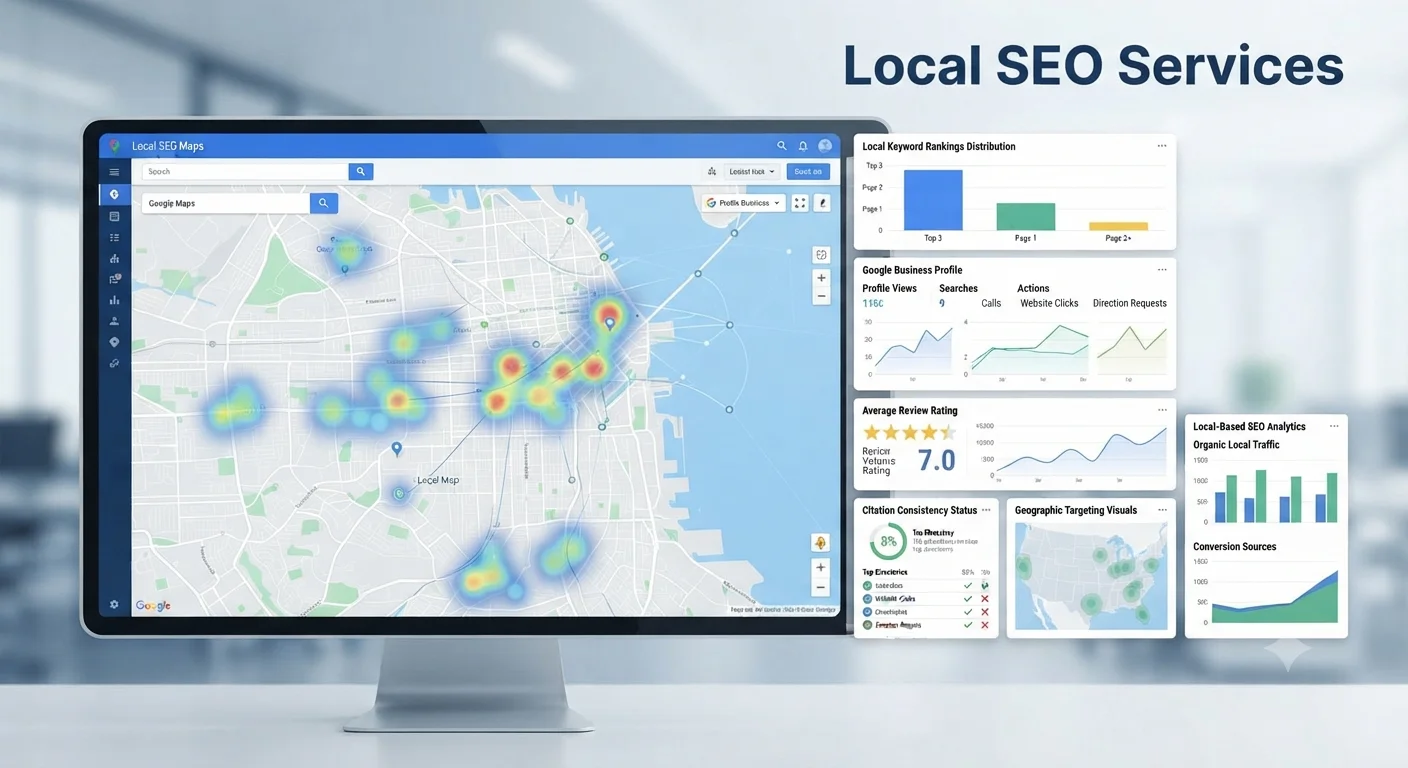
When people need a product or service nearby, their first step is usually a Google search or Google Maps. Whether they’re looking for a plumber, accountant, solicitor, restaurant or marketing agency, they often choose from the businesses that appear first in local search results.
Professional local seo services help your business become more visible where potential customers are already searching. Rather than focusing on one ranking factor, Local SEO combines website optimisation, Google Business Profile improvements, local keyword targeting, content, reviews and technical SEO to build stronger local relevance and trust.
From my experience, many businesses focus solely on optimising their Google Business Profile while overlooking the website and technical improvements that influence long-term local visibility. I take a broader approach, identifying the factors limiting local performance and prioritising the changes that deliver the greatest business impact.
Whether you’re a small local business, a growing service provider or an established company with multiple locations, Local SEO provides the foundation for attracting qualified local customers and supporting long-term organic growth. As part of a wider SEO agency in Portsmouth strategy, it helps connect your business with people who are actively searching for the services you offer.
Why Local SEO Services Matter More Than Ever
Local SEO services improve your visibility in Google Search, Google Maps and other local search experiences by strengthening your website, Google Business Profile and local relevance. The goal isn’t simply to rank higher but to make it easier for nearby customers to discover and trust your business.
The way people search for local businesses has changed significantly over the past few years.
Instead of browsing directories or visiting multiple websites, users expect Google to recommend the most relevant businesses almost instantly. Searches such as:
- “SEO agency near me”
- “best accountant in Portsmouth”
- “emergency plumber nearby”
- “digital marketing consultant”
often result in Google displaying a Local Pack before the traditional organic listings.
Appearing in these prominent positions can increase visibility, website visits, phone calls and enquiries. However, earning those positions requires more than simply creating a Google Business Profile.
Successful Local SEO combines several elements working together:
- A technically healthy website.
- Relevant local content.
- Accurate business information.
- Consistent local citations.
- Positive customer reviews.
- Strong internal linking.
- Clear service and location pages.
- Ongoing optimisation.
Businesses that treat Local SEO as a long-term strategy rather than a one-off task are more likely to build sustainable visibility and trust within their local market.
How People Search for Local Businesses Today
Local search has become increasingly intent-driven.
Someone searching for “coffee shop near me” usually wants immediate results, while a search for “SEO consultant Portsmouth” suggests a business owner researching providers before making contact.
Google analyses many different signals to determine which businesses deserve to appear prominently.
These include:
- Search relevance.
- Business proximity.
- Online prominence.
- Website quality.
- User experience.
- Customer reviews.
- Business information accuracy.
This means Local SEO is no longer limited to optimising a business listing. Your website, content and technical foundations all contribute to how search engines evaluate your business.
As AI-powered search continues to evolve, these signals are becoming even more interconnected, making a holistic Local SEO strategy increasingly important.
Why Local Visibility Is About More Than Google Business Profile
One of the biggest misconceptions I encounter is that creating a Google Business Profile is enough to achieve strong local rankings.
While your Google Business Profile is an essential component of Local SEO, it’s only one part of a much broader strategy.
During Local SEO projects, I regularly discover businesses with fully completed profiles but websites that suffer from technical issues, weak location pages or poor internal linking. These limitations make it harder for Google to understand the business and confidently recommend it in local search.
Local visibility is influenced by how well different elements work together.
For example:
- Your website should clearly describe the services you offer.
- Your location pages should target relevant local search intent.
- Internal links should help search engines understand important pages.
- Business details should remain consistent across trusted directories.
- Customer reviews should demonstrate credibility and local trust.
Improving one area while ignoring the others often leads to inconsistent results.
That’s why I approach Local SEO as part of a wider SEO strategy rather than focusing on Google Business Profile optimisation in isolation.
My Local SEO Framework
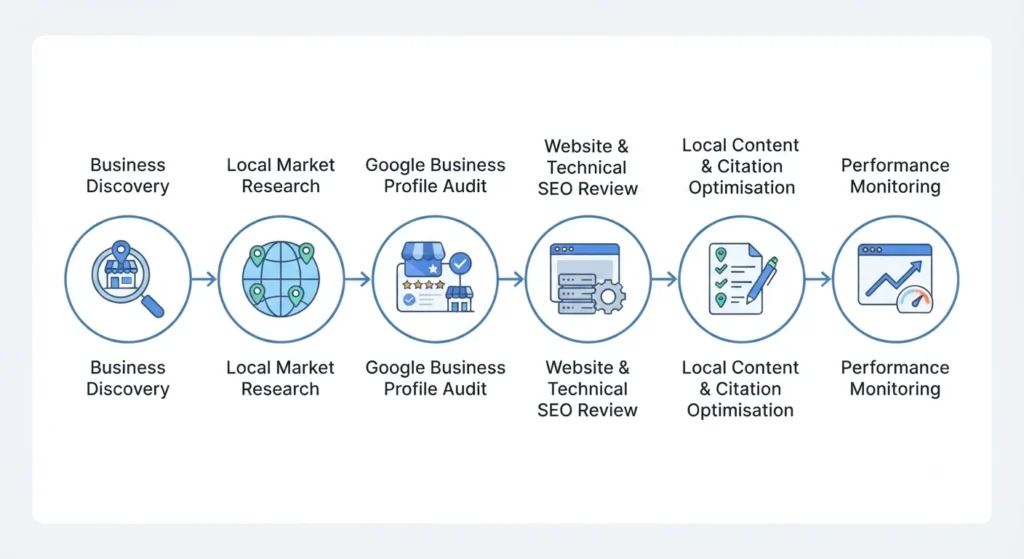
No two businesses compete in exactly the same local market.
A trades business operating across several towns faces different challenges from a solicitor targeting a city centre or a retailer managing multiple physical locations.
Rather than following a generic Local SEO checklist, I begin by understanding how customers search for your services, who your competitors are and which factors are limiting your current visibility.
This helps ensure every recommendation supports your wider business objectives rather than simply improving SEO metrics.
Understanding Your Business and Local Market
Every Local SEO campaign starts with research.
Before making recommendations, I review:
- Your products or services.
- Target locations.
- Customer search behaviour.
- Local competitors.
- Existing website performance.
- Google Business Profile visibility.
- Current keyword rankings.
- Search Console performance.
Understanding the local market allows me to identify opportunities that competitors may have overlooked.
For example, one Local SEO project revealed that the business had focused on broad industry keywords while ignoring high-intent location-based searches. By restructuring content around service-specific and local keywords, improving internal linking and strengthening location relevance, the website attracted more qualified local traffic.
Rather than chasing search volume alone, I prioritise keywords that are most likely to generate enquiries and long-term business growth.
Google Business Profile Review
Your Google Business Profile is often the first impression potential customers have of your business.
I review every important element, including:
- Primary and secondary business categories.
- Business description.
- Contact information.
- Opening hours.
- Service areas.
- Products and services.
- Photos.
- Customer reviews.
- Questions and answers.
- Regular profile updates.
In one Local SEO project, I optimised a Google Business Profile by updating business information, selecting more relevant categories, improving the business description, encouraging customer reviews and publishing regular updates.
These improvements increased Local Pack visibility and generated more enquiries from nearby customers.
This experience reinforced an important lesson:
A well-optimised profile works best when supported by a technically strong website and relevant local content rather than acting as a standalone marketing asset.
Website and Technical SEO Assessment
Local rankings don’t depend solely on Google Business Profile.
Google also evaluates the quality and accessibility of your website.
During every Local SEO review, I assess:
- Crawlability.
- Indexability.
- Website speed.
- Mobile usability.
- Internal linking.
- Structured data.
- Service pages.
- Location pages.
- Core Web Vitals.
- Local landing page performance.
I’ve worked on websites where crawl errors, broken internal links and indexing issues prevented important location pages from performing well.
By resolving technical problems, improving website structure and strengthening internal links, those pages became easier for search engines to discover and better positioned to compete in local search.
These technical improvements also support wider optimisation efforts through technical seo services, ensuring your website provides a strong foundation for long-term local growth.
Local Keyword and Competitor Research
Local SEO begins with understanding how your customers actually search.
Many businesses focus on broad keywords with high search volumes, but those searches don’t always lead to enquiries. Instead, I look for keywords that reflect genuine local intent and align with your services.
My research process includes:
- Identifying primary and secondary local keywords.
- Analysing service and location combinations.
- Reviewing competitor rankings.
- Finding long-tail local search opportunities.
- Analysing Google’s Local Pack.
- Reviewing “People Also Ask” questions.
- Identifying content gaps.
- Mapping keywords to the most appropriate pages.
I also use Google Search Console to identify keywords already generating impressions but not enough clicks. These opportunities often provide quick wins because Google already associates your website with those searches.
During one Local SEO campaign, I found that the website was targeting broad industry keywords while overlooking service-specific, location-based searches. By restructuring the content, improving internal linking and optimising location pages around higher-intent keywords, the business attracted more qualified local visitors and improved visibility for searches that were far more likely to generate enquiries.
This keyword research process also complements keyword research services, ensuring your Local SEO strategy is built on genuine customer behaviour rather than assumptions.
Content and Location Page Optimisation
Google needs clear signals about where you operate and which services you provide.
That’s why every Local SEO strategy should include well-structured, high-quality content that reflects both user intent and local relevance.
When reviewing a website, I assess:
- Service pages.
- Location pages.
- Search intent alignment.
- Heading structure.
- Internal links.
- Local keyword placement.
- Business information consistency.
- Content freshness.
One mistake I frequently see is businesses trying to target multiple towns or cities on a single page. This often creates weak, generic content that struggles to rank well for any location.
Instead, I prefer building focused, high-quality pages that clearly explain:
- The services offered.
- The areas covered.
- Relevant customer problems.
- Helpful local information.
- Clear internal links to related services.
Optimising content this way not only improves local relevance but also strengthens broader content seo services by creating pages that are useful for both users and search engines.
My Local SEO Priority Matrix
One of the biggest misconceptions about Local SEO is that every optimisation task has equal importance.
In reality, some issues can significantly limit your local visibility, while others provide incremental improvements over time.
Rather than overwhelming businesses with lengthy checklists, I prioritise recommendations according to their likely impact on local search performance.
Critical Priority
These issues directly affect whether Google can understand and trust your business.
Examples include:
- Incorrect Google Business Profile information.
- Duplicate business listings.
- Inconsistent Name, Address and Phone Number (NAP).
- Missing or incorrect primary business categories.
- Indexing issues affecting important location pages.
These problems should always be addressed first because they influence the core signals Google uses to evaluate local businesses.
High Priority
These improvements strengthen both local rankings and user experience.
Examples include:
- Weak location pages.
- Limited customer reviews.
- Poor internal linking.
- Missing Local Business schema.
- Slow-loading mobile pages.
- Weak local keyword targeting.
These enhancements help improve both visibility and engagement.
Medium Priority
Once the foundations are in place, I focus on opportunities such as:
- Expanding local content.
- Building additional citations.
- Improving image optimisation.
- Enhancing FAQs.
- Strengthening topical authority.
- Improving service page depth.
These improvements help maintain long-term growth rather than delivering immediate ranking changes.
Ongoing Optimisation
Local SEO isn’t something you complete once and forget.
Google continuously updates search results as businesses receive new reviews, publish fresh content, update business information and improve their websites.
Regular monitoring helps identify new opportunities before competitors take advantage of them.
The Most Common Local SEO Issues I Find
Every Local SEO project is different, but certain issues appear repeatedly across businesses of all sizes.
Many of these problems develop gradually as websites grow, services change or Google Business Profiles are left unmanaged.
Poorly Optimised Google Business Profiles
Many businesses create a Google Business Profile but never optimise it properly.
Common issues include:
- Incomplete business descriptions.
- Incorrect categories.
- Outdated contact information.
- Missing products or services.
- Infrequent updates.
- Poor-quality images.
- Unanswered customer questions.
One project involved improving a Google Business Profile by updating business information, selecting more relevant categories, refining the business description, encouraging customer reviews and publishing regular posts.
These improvements helped increase Local Pack visibility and generated more enquiries from nearby customers.
Inconsistent Business Information
Consistency matters.
If your business name, address or phone number differs across directories, search engines may struggle to verify your business confidently.
During Local SEO campaigns, I review citation consistency across trusted directories and recommend corrections where necessary.
Accurate information strengthens trust signals and supports better local rankings.
Weak Location Pages
Many websites rely on thin pages containing little more than a town name and a short paragraph.
These pages rarely provide enough value to compete effectively.
Instead, I recommend creating location pages that genuinely help users by explaining:
- Services available.
- Local expertise.
- Frequently asked questions.
- Customer problems.
- Relevant supporting information.
Quality content helps both users and search engines understand why your business is relevant to a particular area.
Poor Internal Linking
Internal links help search engines discover and understand your most important pages.
I’ve worked on Local SEO projects where valuable location pages received almost no internal links, making them difficult to crawl despite containing useful content.
By improving navigation and contextual internal links, these pages became easier to discover and gained stronger visibility in local search.
Strong internal linking also supports related resources such as seo audit services, helping search engines understand the relationship between different areas of your website.
Missing Local Schema
Structured data provides additional context about your business.
Although schema doesn’t guarantee higher rankings, it helps search engines understand important information such as:
- Business name.
- Address.
- Contact details.
- Opening hours.
- Services.
- Geographic coverage.
I regularly review schema implementation to ensure websites communicate accurate business information in a structured format.
Limited Reviews and Reputation Signals
Customer reviews are an important trust signal for both users and search engines.
However, Local SEO isn’t simply about collecting as many reviews as possible.
I encourage businesses to:
- Respond to reviews professionally.
- Request genuine customer feedback.
- Keep reviews consistent over time.
- Use customer feedback to improve services.
A strong reputation supports better visibility while helping potential customers choose your business with greater confidence.
Google Business Profile Optimisation Insights
Google Business Profile is often the first interaction a customer has with your business, but many profiles are underused.
To maximise visibility, I recommend regularly reviewing:
- Business categories.
- Service descriptions.
- Contact information.
- Opening hours.
- Products and services.
- Images.
- Customer reviews.
- Questions and Answers.
- Business updates.
These improvements help keep your profile accurate, active and relevant while supporting stronger local search performance.
Website Migrations and Local SEO
Website migrations can affect Local SEO if important technical elements are overlooked.
Following a migration, I check:
- Redirect implementation.
- Internal links.
- XML sitemaps.
- Canonical tags.
- Google Business Profile website links.
- Location page indexing.
- Crawl errors.
- Search Console coverage.
During one migration project, I identified broken redirects, updated XML sitemaps, corrected internal links and resolved indexing issues that had affected important service pages.
These improvements helped restore organic visibility while protecting the business’s local search performance.
How Local SEO Supports Long-Term Business Growth
Local SEO isn’t simply about appearing in Google Maps.
It’s about building a trustworthy online presence that helps nearby customers discover, evaluate and choose your business.
When Local SEO is supported by a technically healthy website, valuable content and strong internal linking, businesses benefit from:
- Greater local visibility.
- Higher-quality enquiries.
- Increased trust.
- Better user experience.
- Stronger organic growth.
- More sustainable search performance.
Local SEO also works best when integrated with broader optimisation efforts. For example, a technically sound website created through technical seo services provides a stronger foundation for local rankings, while well-optimised pages from on-page seo services improve relevance for location-based searches.
By combining technical optimisation, useful content, keyword research and local relevance, businesses create an online presence that is easier for both customers and search engines to trust.
Local SEO for AI Search
Local search is changing. Alongside traditional Google Search and Google Maps, people are increasingly using AI-powered search experiences such as Google AI Overviews, ChatGPT, Gemini and Perplexity to discover businesses, compare services and make buying decisions.
While the technology is evolving, one principle remains the same: AI systems rely on accurate, trustworthy and well-structured information.
From my experience, businesses with strong Local SEO foundations are better positioned to benefit from these changes because they provide consistent signals across their website, Google Business Profile and trusted third-party sources.
When preparing a website for AI-powered search, I focus on:
- Accurate business information.
- Well-structured service and location pages.
- Clear website architecture.
- Local Business schema.
- Strong internal linking.
- Helpful, experience-led content.
- Consistent citations.
- Genuine customer reviews.
These elements not only support traditional search rankings but also contribute to generative engine optimisation, helping AI systems better understand your business and its local relevance.
Rather than treating AI search as a separate strategy, I see it as an extension of good Local SEO. Businesses that invest in strong technical foundations, useful content and trustworthy local signals are more likely to remain visible as search continues to evolve.
Local SEO vs Traditional SEO
Local SEO and traditional SEO share many of the same principles, but they focus on different goals.
Traditional SEO aims to improve visibility across national or international search results, while Local SEO helps businesses appear for location-based searches and in Google’s Local Pack.
| Local SEO | Traditional SEO |
|---|---|
| Targets local customers | Targets broader audiences |
| Optimises Google Business Profile | Focuses primarily on website optimisation |
| Prioritises local keywords | Targets broader search terms |
| Builds local citations | Focuses on wider authority signals |
| Encourages customer reviews | Emphasises content and backlinks |
The two strategies work best together.
A technically strong website, helpful content and effective keyword targeting all strengthen Local SEO, while local relevance helps businesses compete more effectively within their target communities.
Businesses comparing seo vs ppc often find that Local SEO delivers sustainable visibility and long-term value by attracting customers who are actively searching for nearby services.
How Much Do Local SEO Services Cost?
The cost of Local SEO services depends on several factors, including the size of your business, the number of locations you operate and the level of competition in your market.
For example, a single-location trades business usually requires a different strategy from a company managing multiple branches across several towns or cities.
A Local SEO project may include:
- Google Business Profile optimisation.
- Local keyword research.
- Service and location page optimisation.
- Citation management.
- Review strategy.
- Technical SEO improvements.
- Local schema implementation.
- Performance reporting.
Rather than focusing on price alone, I recommend considering the long-term value of attracting qualified local customers through organic search.
If you’re planning a wider optimisation strategy, my guide to seo cost portsmouth explains the factors that influence SEO pricing and how to choose an approach that aligns with your business goals.
Why Work With Me?
Local SEO is about more than improving rankings. It’s about helping your business become more visible where local customers are actively looking for your products or services.
My approach combines technical expertise, content strategy and practical Local SEO experience to create recommendations that support sustainable business growth rather than short-term ranking improvements.
I’ve worked with businesses across the UK, India and Dubai, helping improve local visibility through:
- Google Business Profile optimisation.
- Local keyword targeting.
- Technical SEO improvements.
- Website audits.
- Internal linking.
- Local content strategy.
- Citation management.
- Website migrations.
- Search performance analysis.
Rather than relying solely on automated reports, I combine professional SEO tools with manual analysis to understand the opportunities that matter most for your business.
The tools I regularly use include:
- Google Search Console
- Google Analytics 4 (GA4)
- Google Business Profile
- Screaming Frog SEO Spider
- SEMrush
- Ahrefs
- Google Keyword Planner
- Google PageSpeed Insights
Whether you’re looking to improve your visibility in Google Maps or build a stronger long-term SEO strategy, my goal is to provide practical recommendations that deliver measurable business value.
Local SEO services typically include Google Business Profile optimisation, local keyword research, website optimisation, citation management, review strategy, local content creation, technical SEO improvements and ongoing performance monitoring.
Most businesses begin to see improvements within three to six months, although this depends on factors such as competition, website quality and the current state of their online presence.
Yes. While no one can guarantee rankings, improving your Google Business Profile, website quality, local relevance, citations and customer reviews can strengthen your visibility in Google Maps and the Local Pack.
No. A well-optimised Google Business Profile is important, but it works best when supported by a technically healthy website, relevant content, strong internal linking and consistent business information across the web.
Google Business Profile optimisation focuses on improving your business listing, while Local SEO includes your website, technical optimisation, content, citations, reviews and local authority signals.
For businesses wanting to learn more, my guide to google business profile optimisation portsmouth explores the topic in greater detail.
Yes. Local SEO is particularly valuable for plumbers, electricians, builders, roofers, decorators and other service-based companies because customers often search using location-based queries when they need immediate assistance.
This is one reason why Local SEO forms an important part of my approach to seo for trades businesses.
Yes. Strong organic rankings don't always guarantee visibility in Google's Local Pack or Maps results. Local SEO complements traditional SEO by strengthening your local presence and making it easier for nearby customers to find your business.
Ready to Improve Your Local Visibility?
Being visible in local search is about more than appearing on Google Maps. It requires a technically strong website, helpful content, accurate business information and a strategy that reflects how people search today.
Professional local seo services help connect all of these elements, making it easier for nearby customers to discover your business and trust your expertise.
Whether you’re looking to improve your Google Business Profile, optimise your website or build a stronger long-term local presence, I’d be happy to review your current Local SEO performance and explain where the biggest opportunities for growth exist.
