
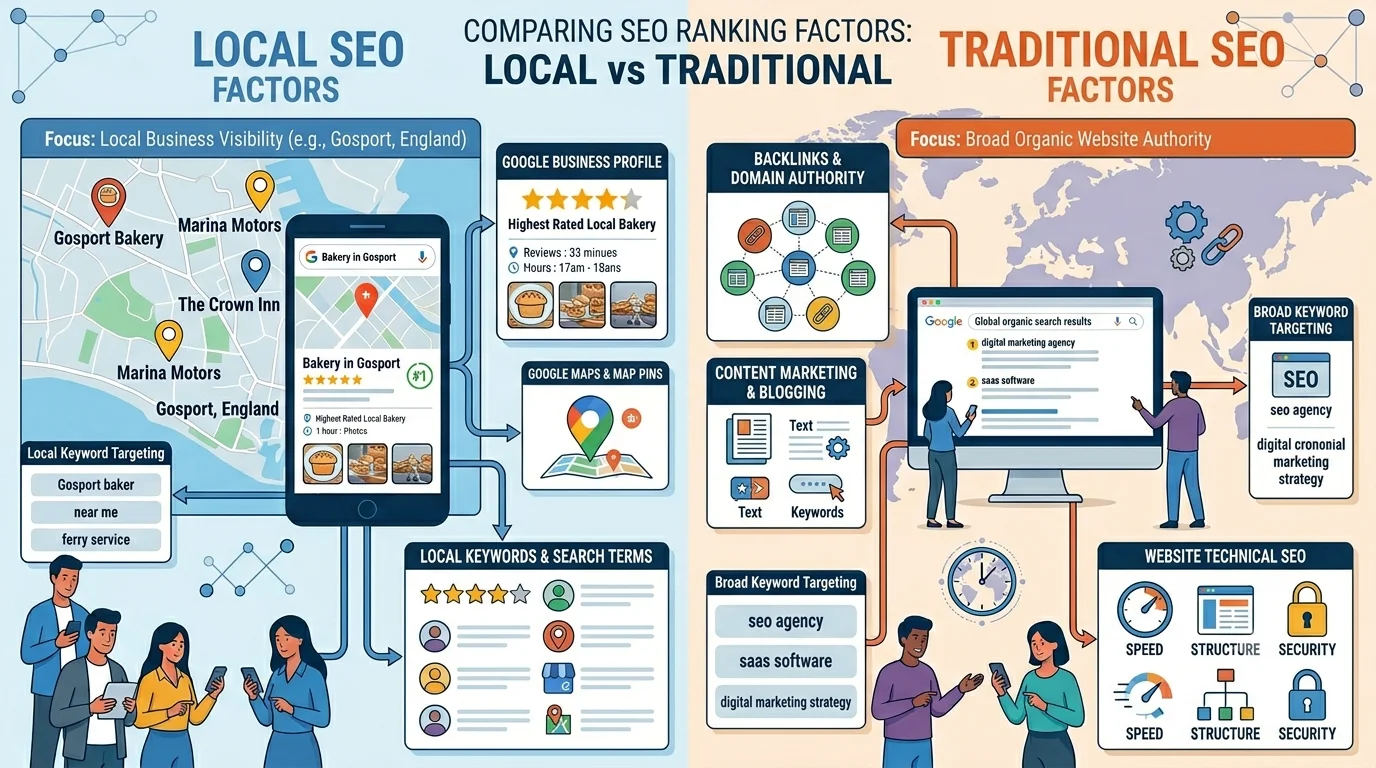
Local SEO vs Traditional SEO is a common comparison for businesses looking to improve their online visibility. While both strategies focus on increasing search engine rankings, they serve different purposes and target different audiences.
A local plumbing company in Camden has very different SEO goals from an e-commerce brand selling products across the UK. Understanding these differences helps businesses invest in the right strategy and maximise their marketing efforts.
Search engines like Google use hundreds of ranking signals to determine which websites appear in search results. Some of these signals focus on geographic relevance, while others focus on content authority and overall website quality.
To fully understand this topic, it is helpful to first explore What Is Local SEO and understand the foundations of location-based search optimisation.
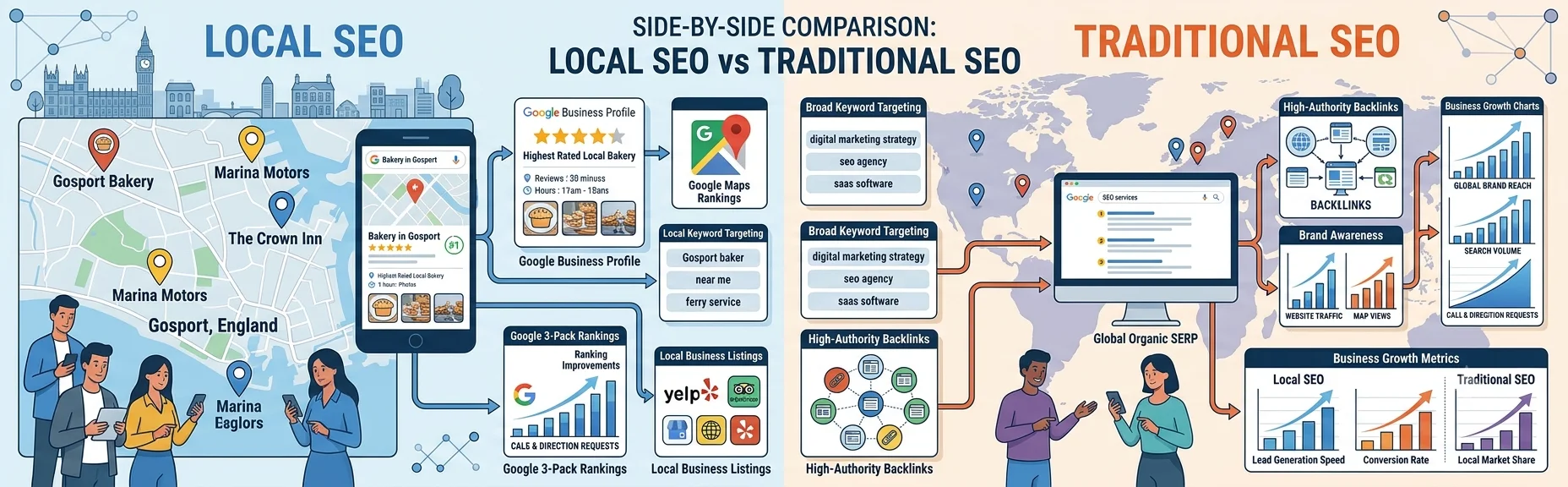
What is Traditional SEO?
Traditional SEO focuses on improving a website’s visibility in organic search results without relying on a specific geographic location.
The goal is to rank for broad keywords that can attract users from anywhere.
Examples include:
- Digital marketing agency
- SEO tools
- Website design services
- Content marketing guide
Traditional SEO relies heavily on:
- Content quality
- Website authority
- Backlinks
- Technical SEO
- User experience
- Keyword optimisation
Businesses using traditional SEO often target national or international audiences rather than customers in a specific city or borough.
For example, an online software company may target users throughout the UK rather than focusing on one location.
Traditional SEO campaigns typically involve:
- Content marketing
- Technical SEO improvements
- Link building
- Keyword research
- Website optimisation
These activities help search engines understand a website’s authority and relevance for a particular topic.
What is Local SEO?
Local SEO focuses on improving visibility for searches that contain geographic intent.
These searches often include:
- Near me
- Open now
- City names
- Borough names
- Local service terms
Examples include:
- Solicitor in Westminster
- Dentist in Camden
- Restaurant near King’s Cross
- Accountant in Islington
Unlike traditional SEO, local SEO depends heavily on local ranking signals.
These include:
- Google Business Profile
- Google Maps
- Local Pack visibility
- Reviews
- Citations
- Local backlinks
- NAP consistency
Businesses seeking stronger local visibility often explore How Local SEO Works to understand how Google evaluates local search results.
Many organisations also invest in Local SEO Services in London to improve their rankings within highly competitive local markets.
Key Differences Between Local and Traditional SEO
Although both strategies aim to improve search visibility, their ranking mechanisms differ significantly.
The biggest difference lies in user intent and geographic relevance.
Ranking Factors
Traditional SEO focuses on:
- Content authority
- Domain authority
- Technical SEO
- Backlinks
- Keyword optimisation
Local SEO focuses on:
- Google Business Profile
- Reviews
- Citations
- Local backlinks
- Location signals
- Google Maps visibility
Google uses local-specific ranking signals when deciding which businesses appear within the Local Pack and Maps results.
Businesses interested in understanding these signals further should review Local Search Algorithm Explained and Google Maps SEO.
One of the most important local ranking assets is a fully optimised Google Business Profile. Businesses can improve this area through Google Business Profile Optimisation in London.
Search Intent
Search intent plays a major role in determining which SEO strategy is appropriate.
Traditional SEO targets informational and commercial searches that may not require a local result.
Examples include:
- How to improve website speed
- SEO best practices
- Content marketing strategy
Local SEO targets users looking for nearby businesses or services.
Examples include:
- Best restaurant in Camden
- Local solicitor near me
- Accountant in Westminster
These searches often indicate stronger purchasing intent because users are actively seeking a solution within their area.
For businesses in hospitality, Local SEO for Restaurants can help capture customers searching for nearby dining options.
Geographic Relevance
Geographic relevance is one of the biggest distinctions between local and traditional SEO.
Traditional SEO often targets broad audiences regardless of location.
Local SEO focuses on specific service areas.
For example:
A London accountant wants visibility in London.
A national accounting software provider wants visibility throughout the UK.
Google uses geographic signals to determine which businesses deserve local visibility.
These signals include:
- Business address
- Service area
- Citations
- Reviews
- Local content
- Google Maps activity
Businesses investing in Google Maps SEO Services London often improve geographic relevance and increase visibility within local search results.
Which Strategy Does Your Business Need?
The answer depends on your business model and customer base.
Traditional SEO is suitable if:
- You sell products nationally
- You provide online services
- You target customers across multiple countries
- Physical location is not important
Local SEO is suitable if:
- You serve customers within a specific area
- You rely on local enquiries
- You operate a physical location
- Customers search for your services nearby
Many businesses benefit from combining both strategies.
For example:
A London restaurant may optimise locally while also creating broader content to improve overall website authority.
This is why businesses often combine local visibility efforts with broader content strategies and review resources such as Local SEO Statistics for London Businesses to understand changing search trends.
Similarly, growing companies frequently discover through Why Small Businesses needs seo services in 2026 that a combination of local and traditional SEO provides the strongest long-term results.
Technical foundations also remain important. Businesses often work with specialists after learning Why Your Business Needs WordPress SEO Experts to ensure websites support both local and organic rankings.
Conclusion
Local SEO vs Traditional SEO is not about choosing one strategy over the other. It is about understanding which approach best aligns with your business goals.
Traditional SEO focuses on broad visibility through content, backlinks, and website authority. Local SEO focuses on helping businesses appear in location-based searches through Google Business Profile optimisation, reviews, citations, local content, and Google Maps visibility.
For businesses serving local customers, local SEO can become one of the most effective channels for generating enquiries and increasing visibility. For businesses targeting broader markets, traditional SEO remains essential.
Understanding the differences allows organisations to allocate resources effectively and create a strategy that supports long-term growth in both local and organic search results.